Sikh Federation raises alarm over expanded Canada–India security cooperation amid ongoing transnational repression
.png)

(Ottawa, Ontario: 22 Assu, Nanakshahi 558 | October 8, 2026 CE) – Sikh Federation Canada is raising serious concerns following the Government of Canada's October 7 announcement regarding expanded security and law enforcement cooperation with India. The agreement advances new cooperation on intelligence-sharing, counter-terrorism, extradition and other security matters despite documented Indian foreign interference and transnational repression targeting Sikhs in Canada.
The announcement followed meetings in New Delhi between David Morrison, Senior Diplomatic and International Affairs Advisor to the Prime Minister, and India's National Security Adviser, Ajit Doval. According to the Privy Council Office, both governments agreed to deepen cooperation on transnational organized crime, terrorism, violent extremism, cybercrime and extradition. They also committed to strengthening institutional mechanisms and establishing new channels for information-sharing.
These commitments are particularly concerning given Doval's central role in overseeing India's national security and intelligence apparatus. Indian officials and intelligence networks have been implicated in surveillance, intimidation and violence against Sikh activists abroad, including the assassination of Shaheed Bhai Hardeep Singh Nijjar in June 2023. No senior Indian government official has been publicly held accountable for these activities to date.
The government's readout makes no reference to transnational repression, Indian foreign interference or accountability for state-linked violence in Canada. Instead, it emphasizes growing mutual trust, economic negotiations and the prospect of a substantive bilateral defence relationship.
This omission raises serious concerns about whether accountability for Indian transnational repression is being subordinated to Canada's economic and diplomatic priorities.
Canada's own institutions have documented India's efforts to influence Canadian policy toward Sikh political advocacy. In her final report, Justice Marie-Josée Hogue concluded that "India has tried to pressure Canada to go beyond the parameters of Canadian law to counter supporters of an independent Khalistan."
Canadian intelligence assessments have also documented India's tendency to characterize lawful advocacy for Khalistan as a threat to its domestic security. This distinction is fundamental. Advocacy for Sikh self-determination is protected political expression and cannot be criminalized merely because India opposes it. Expanded intelligence-sharing, counter-terrorism cooperation and extradition arrangements risk creating additional institutional channels through which politically motivated allegations originating in India can misuse Canadian law enforcement mechanisms.
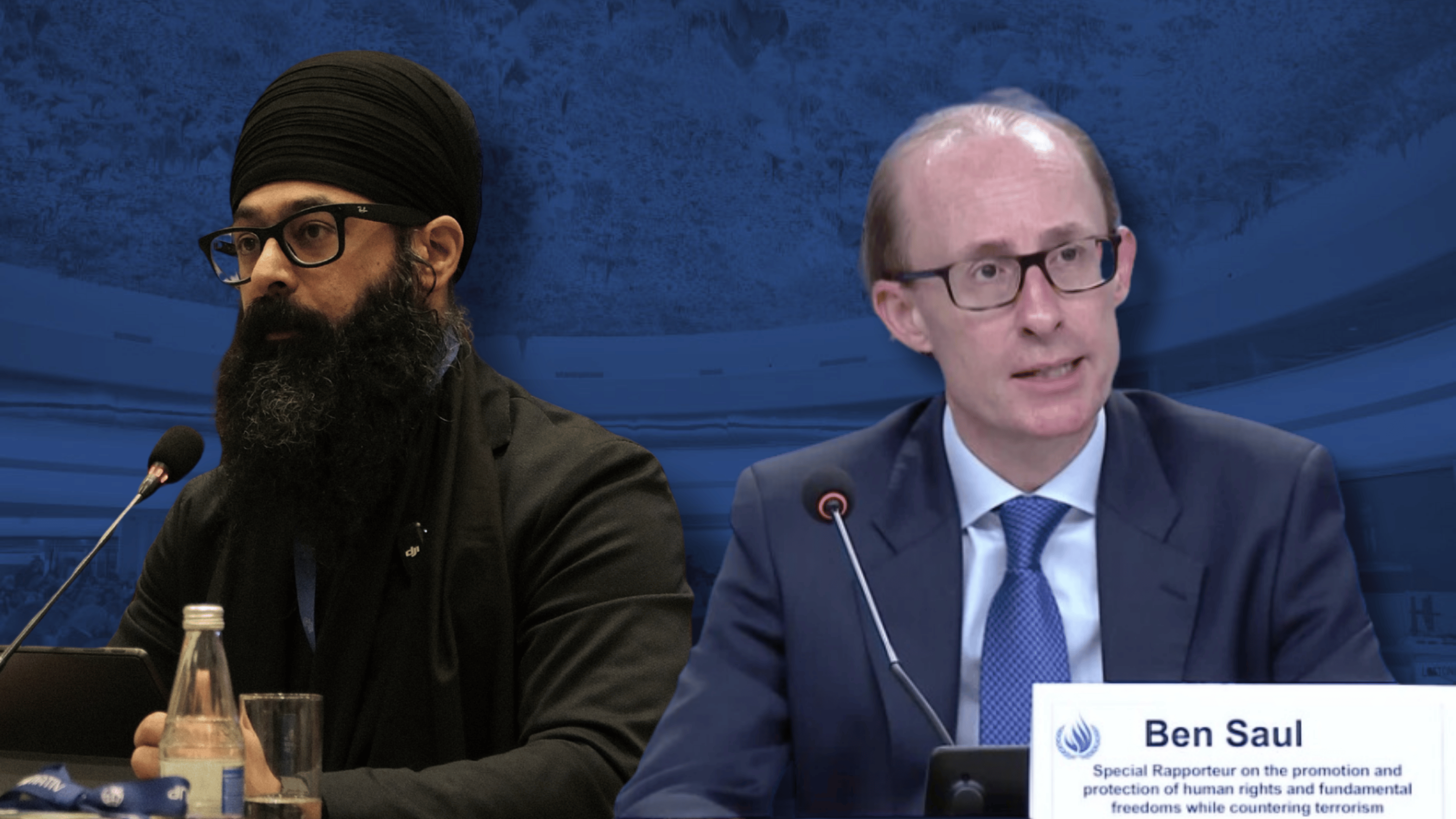
United Nations human rights experts have explicitly identified this danger. In their September 23, 2026 Joint Statement on Transnational Repression, UN experts identified the "misuse of international and regional law enforcement and legal cooperation mechanisms" as a recognized method of transnational repression, specifically referencing INTERPOL notices, extradition, mutual assistance and counter-terrorism frameworks.
The same statement calls upon states to refrain from assisting transnational repression through information-sharing, surveillance cooperation, extradition and mutual legal assistance. It further calls for safeguards against the politically motivated misuse of national security, immigration and international legal cooperation mechanisms.
These international findings directly implicate the categories of cooperation Canada is now expanding with India.
"Canada's own public inquiry documented India's efforts to pressure Canadian institutions into acting against lawful Sikh political advocacy. The government is now expanding the very security and legal cooperation mechanisms that UN experts have identified as instruments of transnational repression," said Moninder Singh, National Spokesperson for Sikh Federation Canada. "Without transparency, independent oversight and accountability for Indian state-linked violence, these arrangements risk giving foreign interference a formal institutional pathway. The fundamental rights of Sikhs in Canada cannot be used as bargaining chips in exchange for closer economic and diplomatic relations."
The commitment to expand extradition cooperation is especially troubling. In June 2023, the House of Commons Standing Committee on Justice and Human Rights published Reforming Canada's Extradition System, identifying significant deficiencies in Canada's extradition framework and recommending stronger judicial oversight and human-rights safeguards.
Despite these longstanding concerns, the government has announced deeper extradition cooperation with a state whose efforts to influence Canadian action against Sikh political advocates have already been documented by a federal public inquiry. Sikh Federation Canada has formally raised these concerns in a letter to Public Safety Minister Gary Anandasangaree.
Given these grave concerns, Sikh Federation Canada calls upon the Government of Canada to:
- Immediately suspend and independently review security, intelligence and legal cooperation arrangements with India that may facilitate transnational repression, including extradition, mutual legal assistance, intelligence-sharing and counter-terrorism cooperation.
- Implement the recommendations of Parliament's June 2023 report on extradition reform and establish independent review mechanisms to prevent the misuse of extradition, immigration and national security proceedings against political dissidents.
- Review criminal, immigration, national security and administrative measures taken against Sikh activists where Indian intelligence, diplomatic pressure or politically motivated allegations may have influenced Canadian decision-making.
- Establish an independent public inquiry into Indian transnational repression in Canada and pursue accountability for Indian officials implicated in foreign interference, intimidation and violence.
Canada cannot counter Indian transnational repression while expanding sensitive cooperation without demonstrating how its institutions will prevent further misuse. The absence of transparency and accountability has already undermined public confidence in the government's response to Indian foreign interference. The Government of Canada must fulfill its constitutional and international human-rights obligations independently of its economic and strategic relationship with India. Any expansion of security cooperation must be subject to meaningful public accountability, independent oversight and enforceable safeguards against transnational repression.
For media inquiries, please contact: info@sikhfederation.ca.
More News
I write today to express grave concern regarding the Government of Canada's October 7, 2026, announcement of expanded security and law enforcement cooperation with India following meetings between David Morrison, Senior Diplomatic and International Affairs Advisor to the Prime Minister, and India's National Security Adviser, Ajit Doval.